Showing posts with label pay attention. Show all posts

Friday, August 10, 2012

Suppose The Day Is Being Photographed


Have you ever taken a trip and, when you looked back at your photos, appreciated the remembering of the experience more than when you were actually there?

I recently went to Paris. It was what I expected and nothing of what I expected. I did expect fine art and architecture, flaky croissants and crisp baguettes, all wine and cheese to be good, and to wish I could better speak the musical language. I didn't expect the women to be wearing very little makeup or perfume, or for The Louvre to allow flash photography, or for it to be so crowded that one would have to use elbows to get to the Mona Lisa. Needless to say, who could really see it under those conditions?

I knew I would like the Paris Opera House. I knew I wouldn't care about going up in the Eiffel Tower. I thought I would find high fashion everywhere, but didn't. And while there, I was already making plans for what I would do differently if I ever went back.

I had a good time--I especially liked it when the French woman who sold me a scarf offered to tie it for me. And though it wasn't funny then, I now laugh about getting stuck in the turnstile at the train station. In reviewing my pictures when I came home, I found it curious that I had snapshots of so many doors. And I regretted I had only 1 of the 17 bridges on the Seine.

Doors. Bridges. I have done the same in other cities. Hmm.

And your pictures from your travels -- have you realized a pattern?

If a person from the other side of the world came to visit us, what would she take pictures of that we no longer pay attention to?

What about today or tomorrow, here at home? Suppose the day is being photographed. Are there things that will have passed us by until we look back?  Could your breakfast omelette filled with crisp bits of bacon and topped with snipped fresh chives next to three firm red-ripe strawberries have been  pretty enough for a picture? Maybe someone joined you at the table, poured your orange juice, and expressed thanks with a kiss on your cheek. Or maybe you remember the day it was so.

Perhaps on the way to do something as mundane as gettting the mail from the mailbox we see a rainbow in the puddle from last night's rain. The toddler from next door is trying to pick up a watermelon. His mother is laughing. Her husband is in Afghanistan.

Pick up the blue-black feather on the sidewalk. Listen. Look up. Note the exact blue of this morning's sky. Yes -- today is a photograph.

And before we step back inside, let's not forget to notice the door!


Sunday, October 17, 2010

And Don't Be Afraid


I read this poem a few minutes ago and I immediately wanted to share it with you.  I can't express exactly why it resonates with me so much, but poetry touches us on so many different levels, it is often hard to articulate why it accomplishes what it does.

Let Evening Come
   by Jane Kenyon

Let the light of late afternoon
shine through chinks in the barn, moving
up the bales as the sun moves down.

Let the cricket take up chafing
as a woman takes up her needles
and her yarn. Let evening come.

Let dew collect on the hoe abandoned
in long grass. Let the stars appear
and the moon disclose her silver horn.

Let the fox go back to its sandy den.
Let the wind die down. Let the shed
go black inside. Let evening come.

To the bottle in the ditch, to the scoop
in the oats, to air in the lung
let evening come.

Let it come, as it will, and don't
be afraid. God does not leave us
comfortless, so let evening come.

I wish I had taken photos of barns in years past when they were a common sight for me, or really looked at a hoe abandoned in long grass, or paid attention to the landscape dotted with bales of hay.  I especially like the poem's images of light of late afternoon shining through chinks in the barn, the fox going back to its sandy den, the wind dying down, and the shed going black inside.  Go back and look at some of the nouns in the poem:  light, cricket, yarn, dew, stars, moon, (silver) horn, bottle (in the ditch), scoop (in the oats)...  . There are so many objects I bypass every day without giving them a thought. Bypass. Pass by. I must do better.

At the moment, I'd like to be sitting in a squeaky swing on an old wooden porch surrounded by oak trees and Spanish moss at dusk, when dinner supper is over, and the only care is a sink with suds and a few dishes. I think I was there once upon a time, but I don't remember appreciating it. I am trying to do better.

At the beginning of this post, I said I couldn't explain why this poem resonates with me. I still can't. I have written and deleted sentences and paragraphs because they are simply inadequate. Let the poem speak for itself. Read it again, aloud if possible. It is a comfort poem. It will calm your spirit.

And let us take the last line with us --  "...don't be afraid. God does not leave us comfortless, so let evening come."

Sunday, July 11, 2010

Not The Yellow Butterfly

This morning there was a yellow butterfly that kept flying around yellow leaves on a tree outside. I was able to see it from the comfort of my sofa as I looked through the sliding glass doors and the lanai.

This afternoon, there it was again. I started wondering if it was only a coincidence that the leaves were yellow and the butterfly was yellow. I thought about how a baby laughs and tries to touch the baby in the mirror. I thought about how most of us are attracted to others who are like us, even if only on a subconscious level.

I went outside with my camera. I took pictures of the yellow leaves, and watched a striped butterfly dart all around. Striped and not solid yellow? Had my eyes been deceiving me from the living room? Still beautiful.   I stood trying not to move, hoping the elusive would be still for a moment and cooperate with the photographer. I felt a sting. It was a mosquito. And then another one. I started imagining snakes. So I moved closer to my front door. There was the yellow butterfly -- directly in front of me. It was definitely yellow, but neither would it be still, not for a second.

What else can I photograph, now that I have the camera ready? I looked down and noticed a miniature plant with lacy leaves. I photographed it. I saw a tiny purple flower. I photographed it. Something flew past me. It landed. I think it was trying to be perfectly motionless, perhaps as a means of defense. Luckily, I was able to photograph it, but it would be impossible to capture its essence.

This beautiful dragonfly with a green head and blue tail and transparent wings almost went unnoticed. If I had not purposely been looking for an opportunity, I would have missed this stunning creature. What else am I missing because I am not paying attention?

According to http://www.dragonfly-site.com/meaning-symbolize.html : "The meaning of a dragonfly changes with each culture. The main symbolisms of the dragonfly are renewal, positive force and the power of life in general. Dragonflies can also be a symbol of the sense of self that comes with maturity. Also, as a creature of the wind, the dragonfly frequently represents change. And as a dragonfly lives a short life, it knows it must live its life to the fullest with the short time it has – which is a lesson for all of us."

Renewal
Positive Force
Power of Life
Sense of Self
Maturity
Change
It Must Live Life to the Fullest With the Short Time It Has

Yes. A lesson for us all.

Monday, June 7, 2010

Still Life


Still -         devoid of or abstaining from motion
                 quiet, subdued, muted, calm, tranquil

Life -        1. a principle or force that is considered to underlie               the distinctive quality of animate beings
                  2. one or more aspects of the process of living

Still Life -  a picture consisting predominantly of inanimate objects

Still.     Life.     It's easy to understand the combination of the two words to mean still -- there's life. Or life that seems not to move -- such as a motionless praying mantis or sloth. But it seemed incongrous that a painting of inanimate objects should be called still life. Then I read that in ancient Egypt, it was believed food and other objects depicted in paintings adorning the tombs would become real in the afterlife.

Here is a list of titles of a few famous paintings:

Still Life with Bowl of Citrons  by Giovanna Garzoni
Vase of Flowers with a Curtain by Jacques de Gheyn II
Quince, Cabbage, Melon and Cucumber by Juan Sánchez Cotán
Still Life with Pie, Silver Ewer and Crab by Willem Claeszoon Heda
Still Life with Fruit, Flowers, Glasses and Lobster by Jan Davidsz. de Heem
Still-Life with Apples and Grapes by Claude Monet
Irises by Vincent Van Gogh
Apples, Peaches, Pears and Grapes by Paul Cezanne

Such ordinary things! Perhaps objects in your home could be the subject of a still life -- a candlestick on a sideboard, a stack of books by a rocking chair, tomatoes and a bottle of olive oil. What would Cezanne or Van Gogh or Monet see if they came to our houses? What do we overlook every day?

I like the editorial review of The Magic of Things:

The Magic of Things


Of painting's enduring genres, it may be the still life that offers the most brazen opportunities for virtuoso flourish, and that most closely approximates painting itself, as an art of arrangement of color, texture and light. Glistening dew drops on flower petals, contorted reflections of light on glass goblets and silver dishes, candied sweets heaped up in Chinese porcelain, the textures of fur, cloth, metal and bone--the rendering of such objects demands of an artist not only skill but an instinct for the thingness of things.

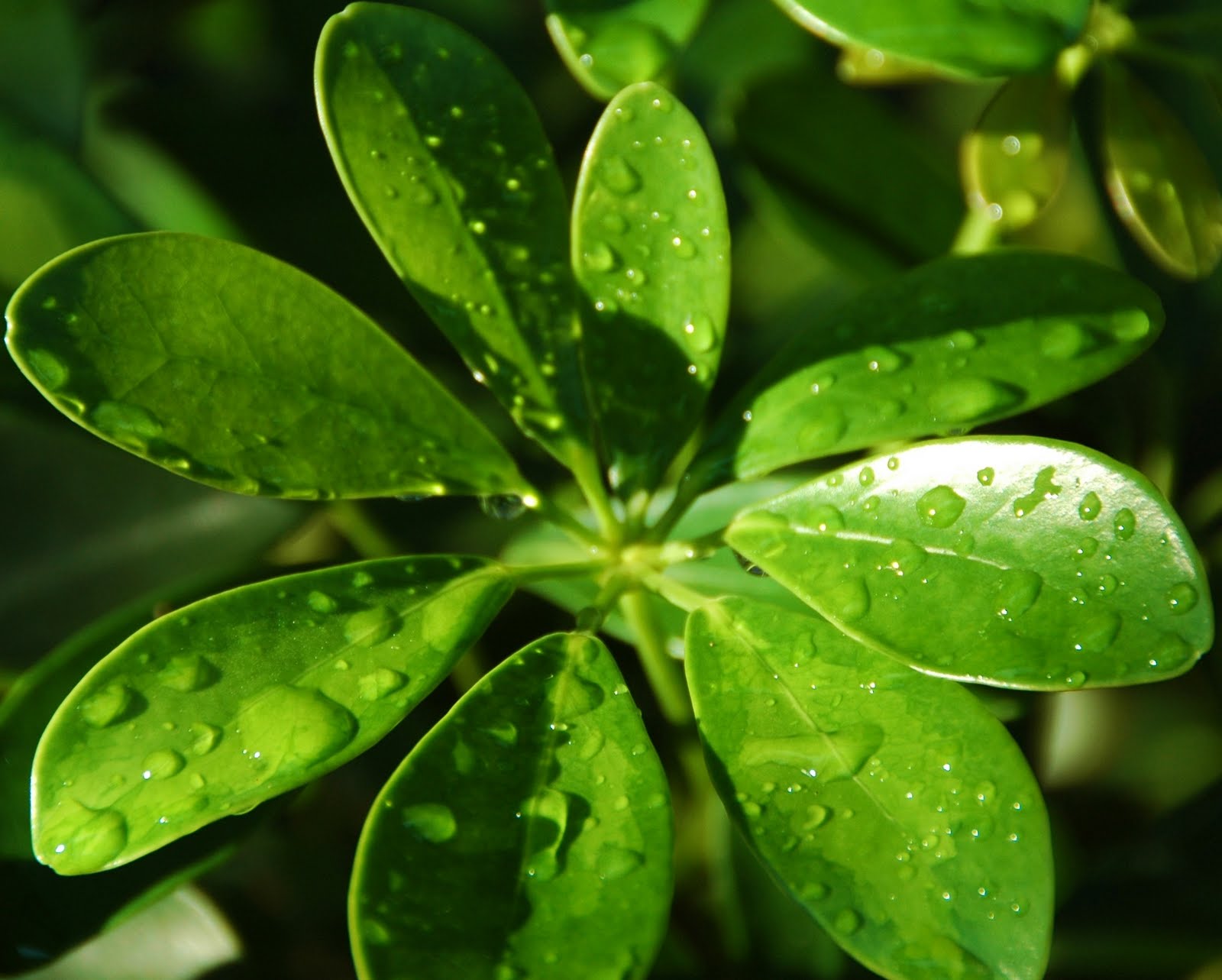
But how often do we really see the vase of flowers or the bowl of fruit, or a cabbage or a cucumber? I would like to pay attention the way the artist must. I would like to notice how light and shadows play with color. I would like to notice the dew drops glisten. I would like to open my eyes.


For your viewing pleasure, click here for  Google Images of Still Life Paintings
And may we all see as the artist sees, and all discover the magic of things.
 

Monday, May 3, 2010

At Least One Delight Each Day

I have lots of notebooks. Sometimes I write in at least one every day, and other times they are all sorely neglected.  But wouldn't it be enriching to record at least one delight each day?

This evening driving home, I saw a bird trying to catch a grasshopper. I laughed as it tried to hop instead of fly across the road to follow its intended target.It finally settled on the sidewalk, in what I imagined to be a state of bewilderment. I felt sorry for the one, and cheered for the other. But those seconds were almost cartoon-like, and an unexpected delight.

A couple of days ago, I stepped to the rear of a large building as I answered my cell phone. Wildflowers of yellow and red-orange and a few purples were everywhere! It looked like someone had planted a garden but no longer tended to it. Nature was taking care just fine. Nature. Natural. Lovely. I felt as if I had found a secret place and the flowers were there just for me.

Looking for delights can only increase our altertness and fine-tune our awareness. I'm reminded of a time a few years ago when someone asked me, "What do you like?" 

 My approximate answer was, "Dark chocolate, a blue heron standing by a pond, the smell of fresh cut lemons, Beethoven's Third Symphony, Italian food, the color blue. What do you like?"

Later, I kept thinking of other things I could have said. "The smell of grass when it is being mowed, acoustic guitar, wine and cheese, cheese and fruit, the cry of a newborn, eating chocolate chips out of the bag, The Blue Angels, leather jackets, violins, tuxedoes, jacuzzis..."

For days, I would think I should have said this and this and this. I started a notebook of "Things I Like," and filled many pages. I believe the same will happen with a notebook of daily delights -- we'll just keep finding more.  Looking for good things, delightful things, and things we like can only do good things.

Whatsovever things are lovely, think on these things.

Sunday, April 18, 2010

A Marvelous Morning


I'm having a marvelous morning. 

It began with a rain concerto playing for me outside each window. I listened for awhile, then pulled the covers up, and listened a little more.  I reached for one of the books on my nightstand -- How to Read a Poem and Fall in Love With Poetry, by Edward Hirsch. I read about things I already love to love. I marvelled at the beauty of the language. I wished everyone could feel what I was feeling. Then I realized that many already do.

A leisurely breakfast was in order. My sound senses were  keen, and I heard  the crunch of one of my new-found joys -- demerara cane sugar, as I ate cinammon toast and a sliced banana. I paid attention to the taste and temperature and aroma of my coffee. Oh, the joy of simple things.  I read some more.

It still rains. The sky light is dim, as if in reverance. Even the birds are quiet. Perhaps they're listening, too.

And I have the pleasure of not having to do anything I don't want to do today. It can be anything. Or it can be nothing. Nothing, except what I may choose.  And who knows what that will be? Because right now, the now is quite enough.

Sunday, December 6, 2009

Seventy-Seven Shades of Gray


Have you ever heard that Van Gogh wrote to Theo he had discovered seventy-seven shades of gray when he was in Provence?  I've been trying to find the passage all  morning, but I did find a copy of an article "The Uncolor Solution" I had saved in 2003. It was from the online May 1st New York Times, and it suggested we look at gray as more than just a dismal color. That writer, Marco Pasanella, listed driftwood, moon rocks,  mist, and Tiffany spoons as examples.

So what can we find, if we look and pay attention? When I stepped outside, it had just stopped raining. I looked around. Specks of the color were in tree bark and branches, the brick pavers we drive over each day, and certain leaves had a gray-green cast. That brown squirrel that scoots across the fence line is really brown and gray. And how about fish, and all those feathers of birds?

Then I did a little research on the many quotes of the artist. It was clear that I had missed so very much.

"...There are but three fundamental colors -- red,, yellow, and blue. Composites are orange, green, and purple. By adding black and some white, one gets the endless variety of grays -- red-gray, yellow-gray, blue-gray, green-gray, orange-gray, violet-gray.

It is impossible to say, for instance, how many green-grays there are; there is an endless variety...The colorist is the person who knows at once how to analyze a color, when it sees it in nature, and can say, for instance: that green-gray is yellow with black and blue, etc. In other words, someone who know how to find the grays of nature on their palette."
Extract from a letter from Vincent van Gogh to his brother Theo written July 31, 1882

And this one:

"The very broad-fronted houses here are set among oak trees of a superb bronze. Tones in the moss of gold-green, in the ground of reddish or bluish or yellowish dark lilac-grays, tones of inexpressible purity in the green of the little cornfields, tones of black in the wet tree trunks, standing out against the golden rain of swirling, teeming, autumn leaves, which hang in loose clumps -- as if they had been blown there, loose, and with the light filtering through them -- from the poplars, the birches, the limes and the apple trees."
Extract from a letter to Theo November 2, 1883

So if I go back outside, what else can I find in the tree bark and branches and bricks and leaves? I'm sure they will look different in varied  light of morning, noon, night. Let the artist within be inspired by our Master Artist of All Things.

I hope you will take a moment to click on this link: A Tribute to Vincent van Gogh . Be sure your sound is enabled.

Let us look. Let us see.


 Labels:  Vincent van Gogh, See, Gray. Pay Attention